

Phone
(028) 6258 5368


 Solution
 Technology
 Application


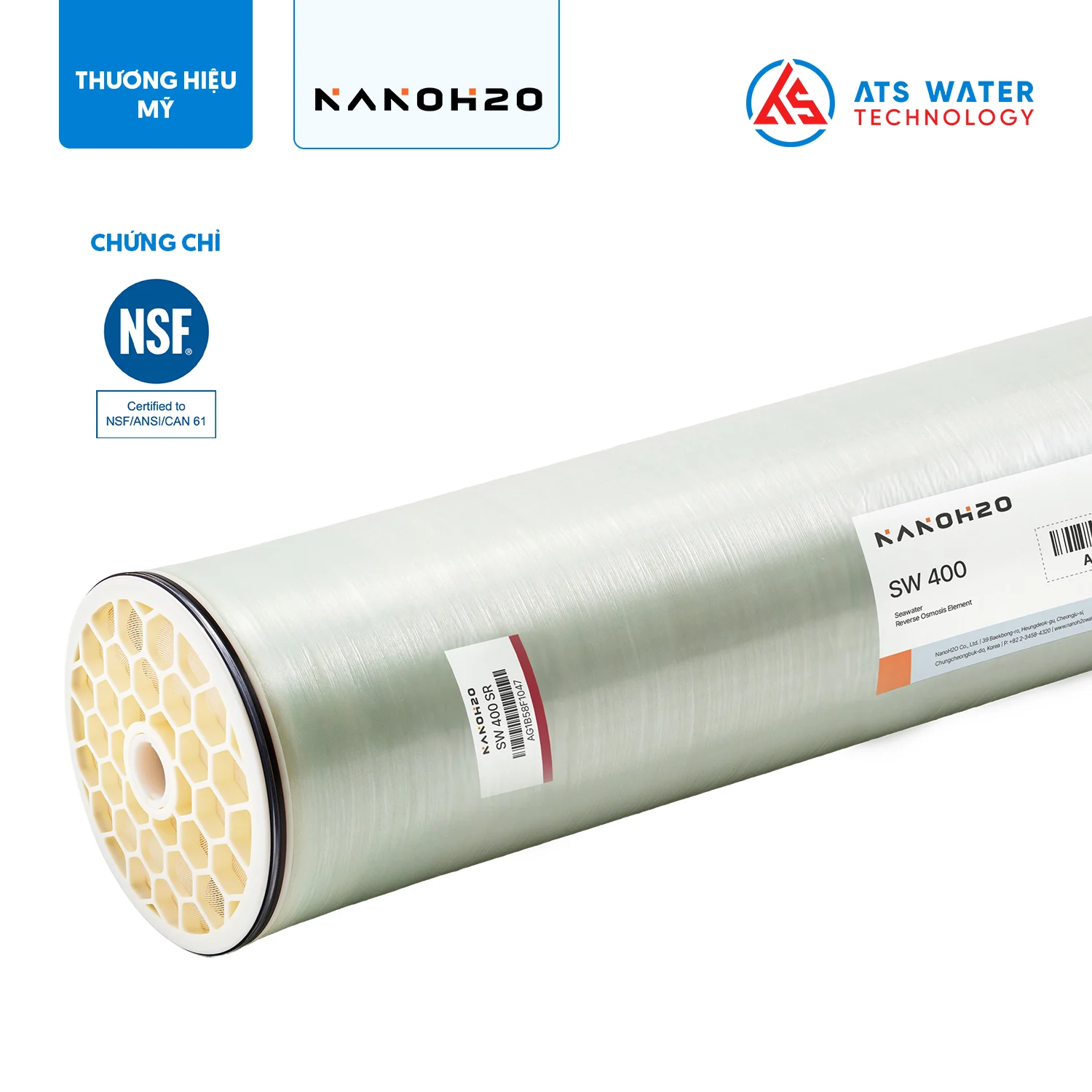
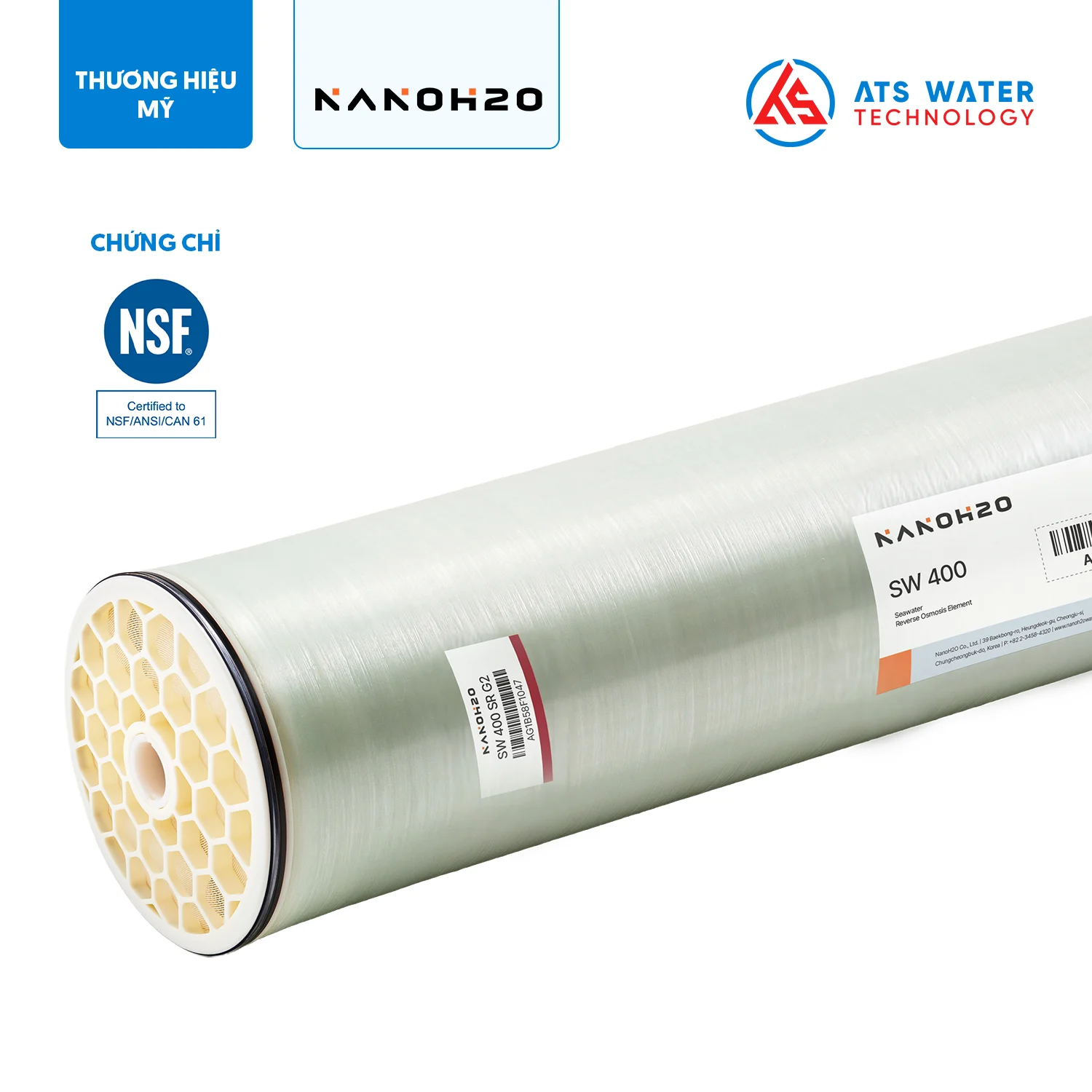
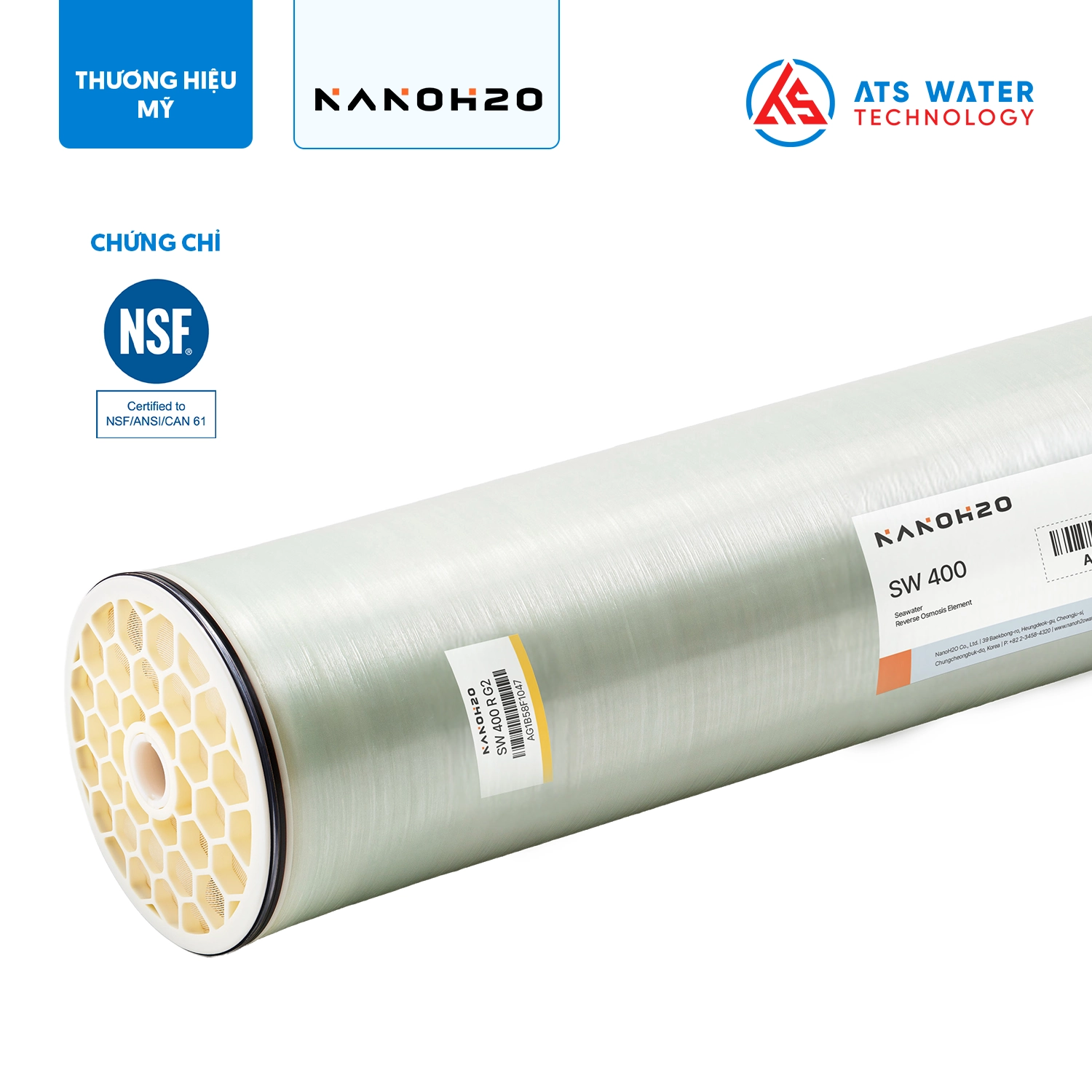
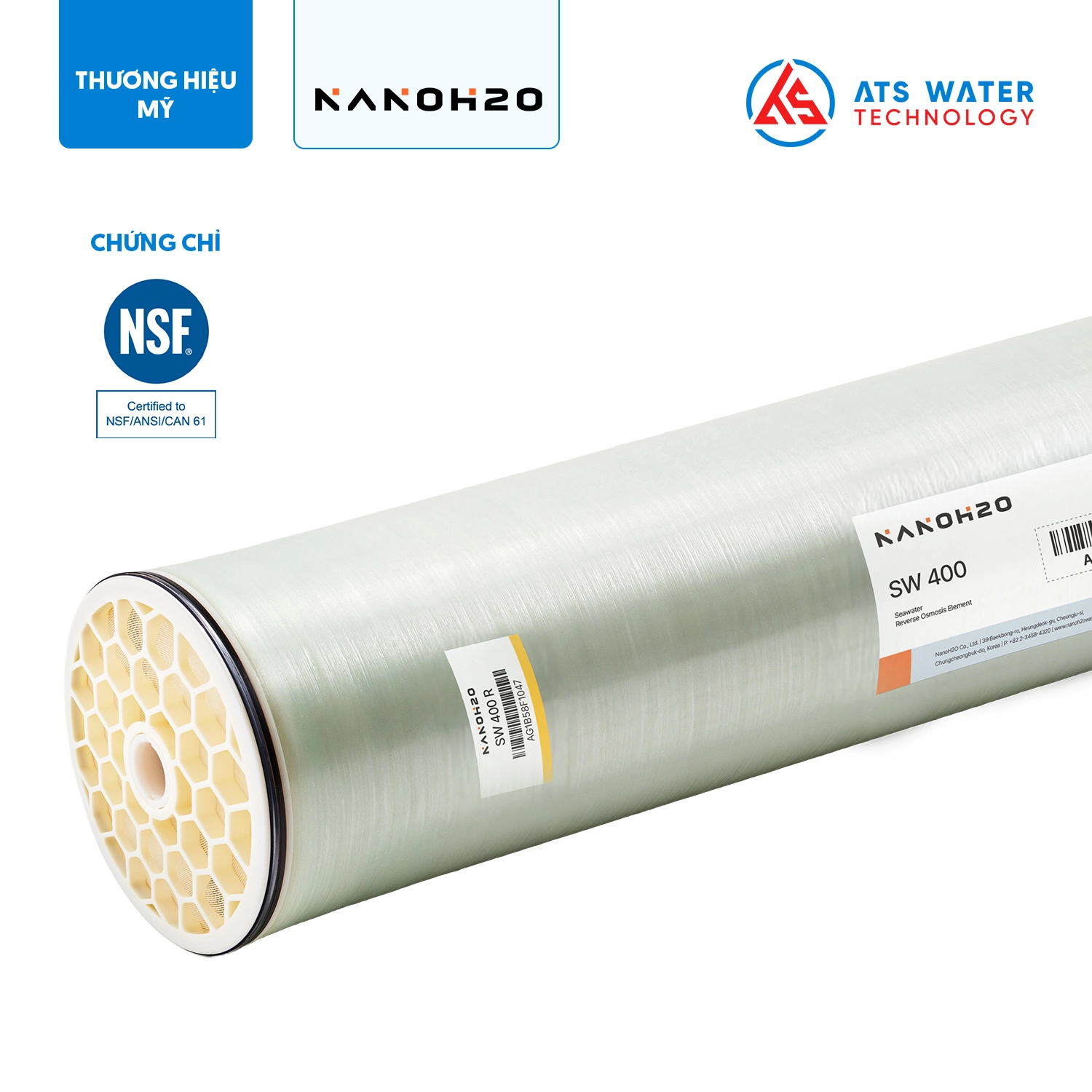
SW 400 SR
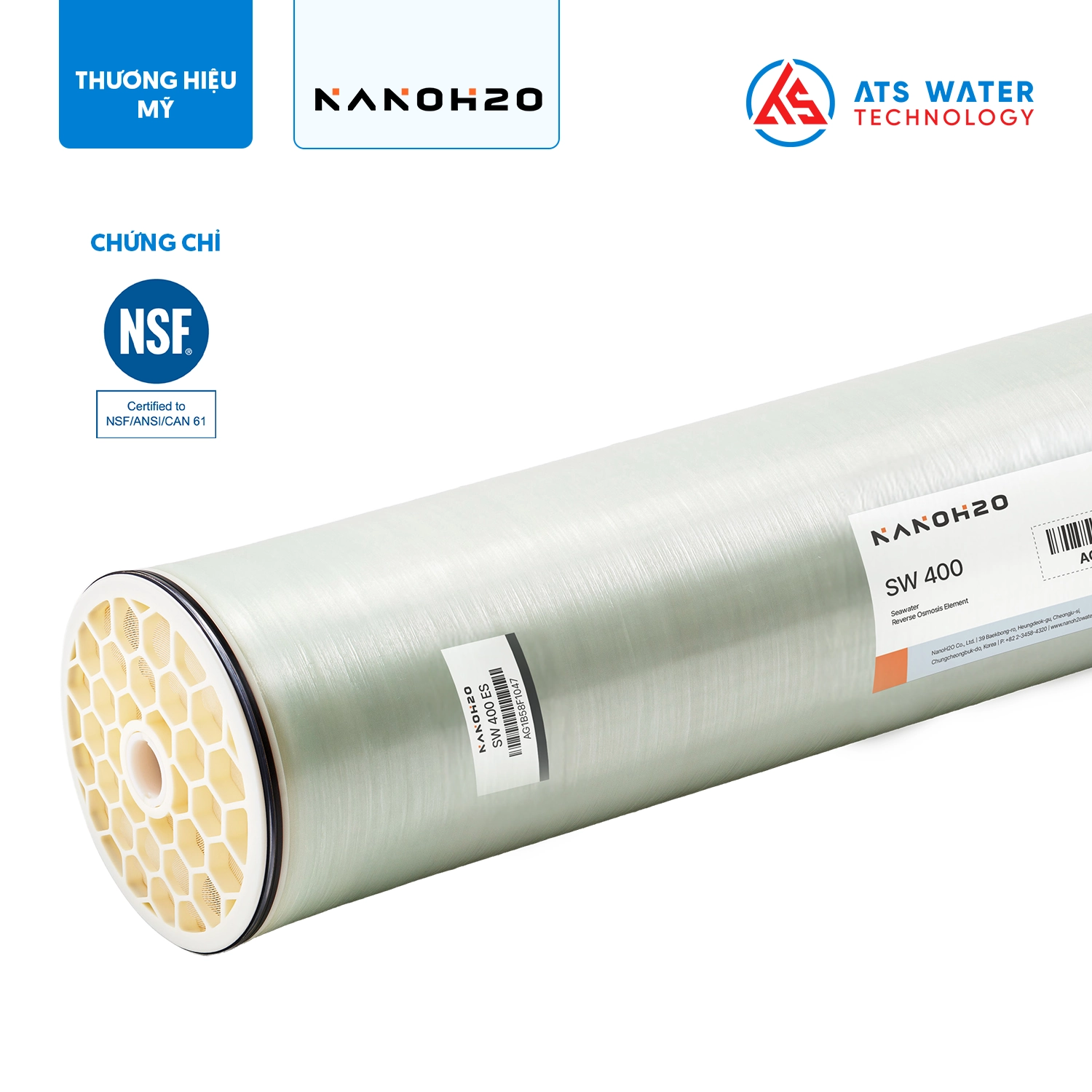
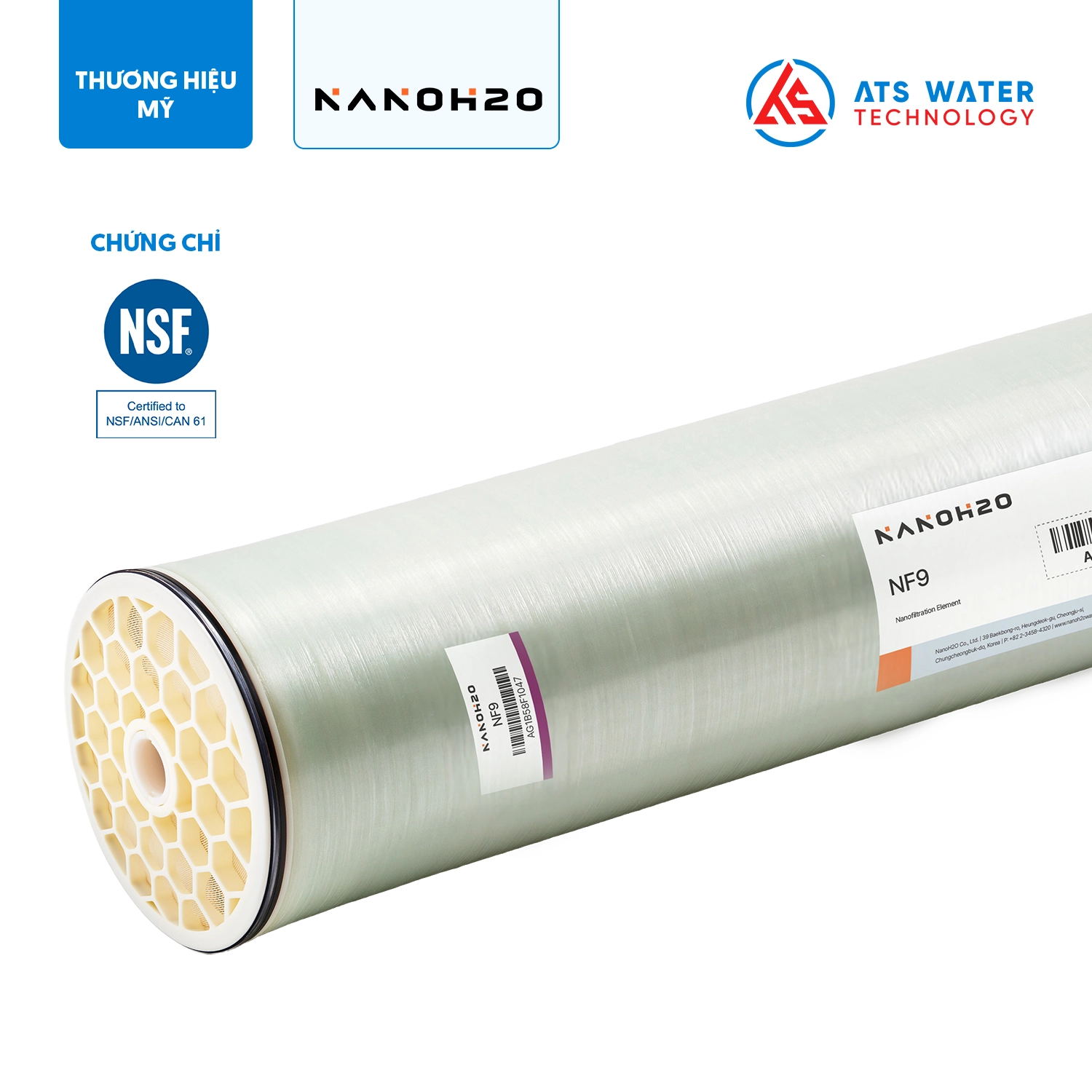
The NanoH2O™ SW 400 SR is engineered for seawater reverse osmosis (SWRO) plants requiring ultra-high permeate purity and proven long-term reliability. Delivering 99.85% stabilized salt rejection (99.70% minimum) and 93% boron rejection, the element produces a nominal permeate flow of 6,000 GPD (22.7 m³/day). Equipped with a 34-mil feed spacer, the SW 400 SR improves resistance to spacer fouling and maintains steady hydraulic performance during continuous operation.
PRODUCT FEATURES
- Incorporates Thin Film Nanocomposite (TFN) technology to elevate separation efficiency and permeate water purity.
- High salt rejection performance, achieving 99.85% stabilized rejection and 99.70% minimum rejection.
- 93% boron rejection, ensuring strict boron control in single- and multi-pass SWRO permeate streams.
- Nominal permeate flow rate of 6,000 GPD (22.7 m³/day), matching design capacity targets for seawater desalination trains.
- 34-mil feed spacer geometry improves resistance to colloidal and biological fouling while preserving steady-state flux.
- 400 ft² (37 m²) of active membrane surface area, fitting standard 8-inch SWRO pressure vessel layouts.
- Suited for both single-pass and multi-pass seawater desalination plant designs.
- Certified to NSF/ANSI Standard 61 for municipal drinking water supply treatment systems.
See more
SPECIFICATIONS
-
Permeate flow rate
6,000 GPD (22.7 m³/day)
-
Stabilized salt rejection
99.85%
-
Minimum salt rejection
99.7%
-
Stabilized boron rejection
93%
-
Active membrane area
400 ft² (37 m²)
-
Feed spacer thickness
34 mil
See more
The NanoH2O™ SW 400 SR RO membrane is purpose-built for seawater desalination facilities needing tight control over permeate water purity alongside long-term mechanical and hydraulic stability. With 99.85% salt rejection, 93% boron rejection, and a 34-mil feed spacer, the element delivers high separation efficiency while mitigating fouling buildup in demanding SWRO trains.
1. Technical specifications of SW 400 SR RO membranes
Performance specifications define the element’s hydraulic and separation capabilities under standardized test conditions. Salt and boron rejection ratings, nominal permeate flow, active membrane area, and feed spacer thickness are critical parameters when specifying elements for an SWRO system:
| SPECIFICATIONS | VALUE |
|---|---|
| Permeate flow rate | 6,000 GPD (22.7 m³/day) |
| Stabilized salt rejection | 99.85% |
| Minimum salt rejection | 99.7% |
| Stabilized boron rejection | 93% |
| Active membrane area | 400 ft² (37 m²) |
| Feed spacer thickness | 34 mil |
2. Operating specifications for SW 400 SR
Operating limits establish the safe mechanical and chemical boundaries for running the element inside a seawater RO train. Controlling feed pressure, temperature, pH, and raw water quality within recommended limits protects the polyamide active layer and preserves long-term operation:
| SPECIFICATIONS | VALUE |
|---|---|
| Maximum applied pressure | 1,200 psi (82.7 bar) |
| Maximum chlorine concentration | < 0.1 ppm |
| Maximum operating temperature | 45°C (113°F) |
| pH range, continuous operation | 2 – 11 |
| pH range, cleaning | 1 – 13 |
| Maximum feed water turbidity | 1.0 NTU |
| Maximum feed water SDI₁₅ | 5.0 |
| Maximum feed flow | 75 gpm (17 m³/h) |
| Maximum pressure drop (ΔP) for each element | 15 psi (1.0 bar) |
3. Key design features of SW 400 SR
The SW 400 SR combines high salt and boron rejection with a 34-mil feed spacer to meet stringent permeate quality and fouling-resistance requirements. The element is engineered for desalination facilities prioritizing field-proven reliability over extended service intervals:
- High salt rejection: Achieves 99.85% stabilized salt rejection (99.70% minimum), minimizing total dissolved solids (TDS) passage and producing ultra-pure permeate.
- 93% boron rejection: Provides 93% boron removal, helping operators maintain strict boron limits in SWRO product water.
- 34-mil feed spacer: The wider 34-mil feed channel geometry improves cross-flow hydrodynamics, reducing particulate trapping and differential pressure (ΔP) buildup during operation.
- 6,000 GPD permeate flow rate: Delivers a nominal permeate flow of 6,000 GPD (22.7 m³/day), meeting hydraulic throughput specifications for seawater desalination skids.
- 400 ft² active membrane area: Offers 400 ft² (37 m²) of effective filtration area, integrating seamlessly into standard SWRO vessel configurations.
- Proven long-term reliability: Field-proven mechanical durability supports continuous operation with predictable performance over extended run times.
- Flexible system integration: Suitable for both single-pass and multi-pass seawater desalination train architectures.
- Prestigious international certification: Certified to NSF/ANSI Standard 61 for potable water supply treatment systems.
4. Key operational advantages of the SW 400 SR membrane
The SW 400 SR delivers a balanced combination of high permeate quality, fouling resistance, and operational dependability, meeting diverse engineering requirements in seawater desalination design:
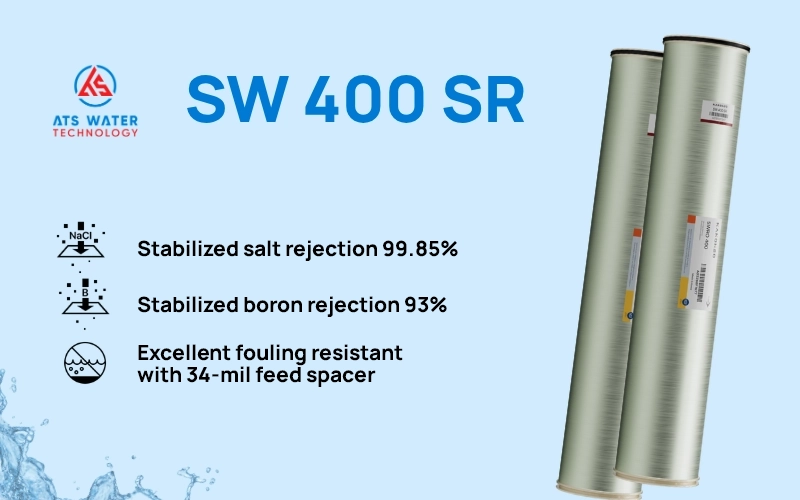
- 99.85% stabilized salt rejection (99.70% minimum) to consistently produce high-purity permeate water.
- 93% boron rejection, meeting stringent boron regulations for municipal potable water and agricultural irrigation reuse.
- 34-mil feed spacer design that reduces spacer fouling and maintains stable hydraulic performance between Clean-in-Place (CIP) cycles.
- 6,000 GPD (22.7 m³/day) nominal permeate output to satisfy plant design flow targets.
- Field-proven reliability that supports uninterrupted operation in harsh seawater environments.
- Versatile deployment across both single-pass and multi-pass SWRO plant configurations.
- Certified to NSF/ANSI Standard 61 for municipal drinking water systems.
5. Certifications for the SW 400 SR RO membrane
The SW 400 SR RO element is certified to NSF/ANSI Standard 61 for drinking water system components. This standard governs materials, components, and products in contact with potable water, giving project owners and design engineers verified compliance for municipal water infrastructure.
For municipal drinking water supply treatment plants, NSF/ANSI Standard 61 certification is a core procurement requirement during technical evaluation and element selection, ensuring all wetted membrane materials comply with strict health regulations.
6. Applications of SW 400 SR
The SW 400 SR is designed for seawater desalination plants that require high permeate quality, improved fouling resistance, and long-term operating stability. It fits both single-pass and multi-pass desalination architectures, including:
- Single-pass seawater desalination systems: Deployed in single-pass SWRO trains demanding high salt and boron rejection without a secondary polishing stage.
- Multi-pass seawater desalination systems: Integrated into multi-pass RO trains where tight permeate purity control is required across sequential treatment stages.
- Municipal seawater desalination plants: Meets membrane specification standards across coastal desalination facilities with varying capacities and feedwater profiles.
- Industrial seawater RO systems: Supplies high-purity desalinated process water, boiler makeup, and cooling water for coastal industrial facilities.
7. ATS Water Technology – Authorized supplier of genuine SW 400 SR membranes
Selecting the right SWRO membrane requires a thorough review of raw seawater chemistry, target permeate quality, plant design capacity, and operating conditions. Evaluating these parameters ensures the chosen element configuration aligns with real-world plant performance targets.
ATS Water Technology Co., Ltd. is an authorized distributor of genuine NanoH2O™ RO membranes in Vietnam and supplies the SW 400 SR element for seawater desalination projects. Complete technical datasheets are available for every element to support system design, membrane replacement, and skid upgrades.
For the SW 400 SR, ATS Water Technology helps engineers and OEM contractors evaluate feedwater TDS, boron levels, design recovery, and operating pressure profiles to verify element suitability and determine optimal vessel configurations.
Featuring 99.85% stabilized salt rejection, 93% boron rejection, and a fouling-resistant 34-mil feed spacer, the SW 400 SR is a reliable choice for demanding seawater desalination systems. Contact ATS Water Technology today for application-specific engineering consultation and technical support.
ATS WATER TECHNOLOGY CO., LTD
- Head office: 54/18 Bui Quang La, An Hoi Tay Ward, HCMC, Vietnam
- Branch office: 77 DHT10B, Dong Hung Thuan Ward, HCMC, Vietnam
- Consultation and support: (028) 6258 5368 – (028) 6291 9568
- Email: info@atswatertechnology.com
- Social media: Facebook | LinkedIn | YouTube
- Quick contact: Zalo Official | Telegram | WhatsApp



How can we help you?


